Department of Gastroenterology
Your Journey to a Healthier Gut Starts Here.




Department of Gastroenterology
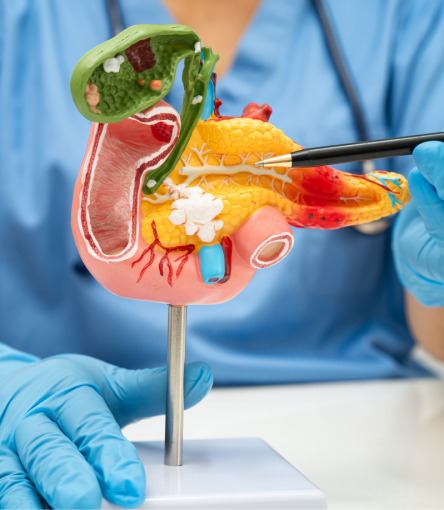
The Department of Gastroenterology and Liver Services at Ashok Hospital has the input of the best medical and surgical gastroenterologists. We specialize in interventional endoscopy relating to the biliary tract and management of complications of portal hypertension, in addition to oesophageal and rectal dilation, colonic polypectomies, and the placement of feeding gastrostomies.
Our department offers the following facilities:
Upper & Lower GI Endoscopy
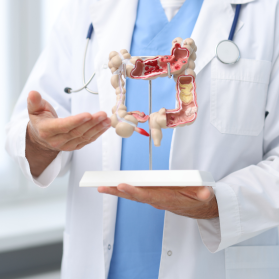
Colonoscopy
Gastroscopy
B.D. Stone (ERCP)
Oesophageal & Rectal Dilation
Biliary Stenting
Oesophageal Stenting
Colonic Polypectomy
Feeding Gastrostomy (PEG Tube Placement)
Capsule Endoscopy
FibroScan for Liver Assessment



Conditions We Treat
Gastroesophageal Reflux Disease (GERD) & Acid Peptic Disorders
Liver Diseases – Hepatitis, Cirrhosis, Fatty Liver
Inflammatory Bowel Disease – Crohn’s Disease, Ulcerative Colitis
GI Malignancies – Stomach, Colon, Esophageal, Pancreatic Cancers
Pancreatic & Biliary Disorders
Portal Hypertension & Variceal Bleeding Management
Why Choose Ashok Hospital for Gastroenterology?
Expert Team: Best-in-class medical and surgical gastroenterologists working collaboratively.
Advanced Interventional Endoscopy: State-of-the-art facilities for complex biliary and GI procedures.
Comprehensive Care: From diagnosis to treatment and follow-up, all under one roof.
24/7 Emergency Readiness: Equipped to handle acute GI emergencies including bleeding, pancreatitis, and foreign body ingestio



Frequently Asked Questions
We manage a wide range of digestive and liver disorders, including acid reflux (GERD), peptic ulcers, hepatitis, fatty liver, cirrhosis, inflammatory bowel disease (Crohn’s disease and ulcerative colitis), pancreatitis, gallstones, and gastrointestinal cancers. Our team also specializes in interventional endoscopy for complex biliary and pancreatic conditions.
A gastroscopy (upper GI endoscopy) examines the esophagus, stomach, and upper part of the small intestine using a thin, flexible tube passed through the mouth. A colonoscopy examines the entire large intestine (colon) and rectum via a similar tube inserted through the rectum. Both are performed under sedation for patient comfort and are essential for diagnosing conditions, performing biopsies, and removing polyps.
No. Endoscopic procedures at Ashok Hospital are performed under conscious sedation, meaning you will be relaxed and comfortable throughout. Most patients experience little to no discomfort and have no memory of the procedure. Our team monitors you closely before, during, and after the procedure.
ERCP (Endoscopic Retrograde Cholangiopancreatography) is a specialized procedure used to diagnose and treat conditions of the bile ducts, gallbladder, and pancreas. It is commonly performed for patients with bile duct stones (B.D. stones), strictures, obstructive jaundice, or pancreatitis. The procedure combines endoscopy and X-ray imaging to remove stones or place stents without the need for open surgery.
A PEG (Percutaneous Endoscopic Gastrostomy) tube is a feeding tube placed directly into the stomach through the abdominal wall using endoscopic guidance. It is recommended for patients who are unable to eat adequately by mouth due to conditions such as stroke, neurological disorders, or severe swallowing difficulties. It provides safe, long-term nutritional support.
Proper preparation is essential for a successful colonoscopy. You will be given detailed instructions that typically include a clear liquid diet for 24 hours before the procedure and taking a prescribed bowel cleansing solution to empty the colon completely. It is important to follow these instructions carefully to ensure clear visualization. Our team will guide you step by step.
Yes. Our department is equipped to handle gastrointestinal emergencies 24/7, including acute GI bleeding, severe abdominal pain, foreign body ingestion, acute pancreatitis, and variceal bleeding. Our emergency team works closely with gastroenterologists to ensure prompt diagnosis and intervention.
While a referral from a primary care physician is helpful, it is not mandatory. You can book an appointment directly with our gastroenterology department. However, if you have complex medical conditions or are seeking a second opinion, carrying your previous medical records and reports will assist our specialists in providing the best care.

Book Your Appointment
Take the first step toward better digestive health. Our team is here to help.